 English


Your cart
0 items
Shopping cart is empty (0 item)
English
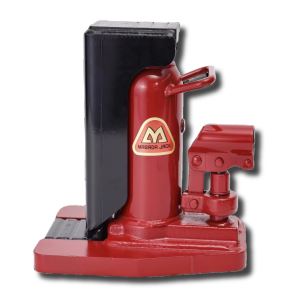
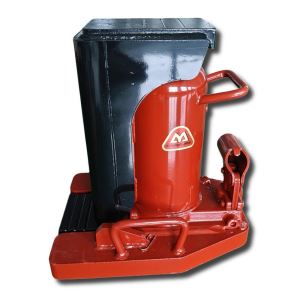
A hydraulic toe jack is a highly specialized mechanical lifting device engineered to support and elevate heavy machinery, industrial equipment, and structural loads reaching up to tens of tons. The defining characteristic of this equipment lies in its ultra-low profile forged steel toe (claw), allowing it to access and lift extreme-weight loads from virtually zero-clearance ground positions where standard hydraulic bottle jacks cannot be deployed.
Manufacturers design hydraulic toe jacks with strict metallurgical tolerances, typically featuring a toe clearance ranging from 19mm to 65mm. This micro-clearance enables rigging teams to seamlessly slide the load-bearing toe beneath structural chassis or tightly packed factory equipment. Consequently, the hydraulic toe jack has become the definitive mechanical solution for heavy lifting, machinery relocation, and structural alignment within manufacturing plants, industrial zones, and civil engineering sites.
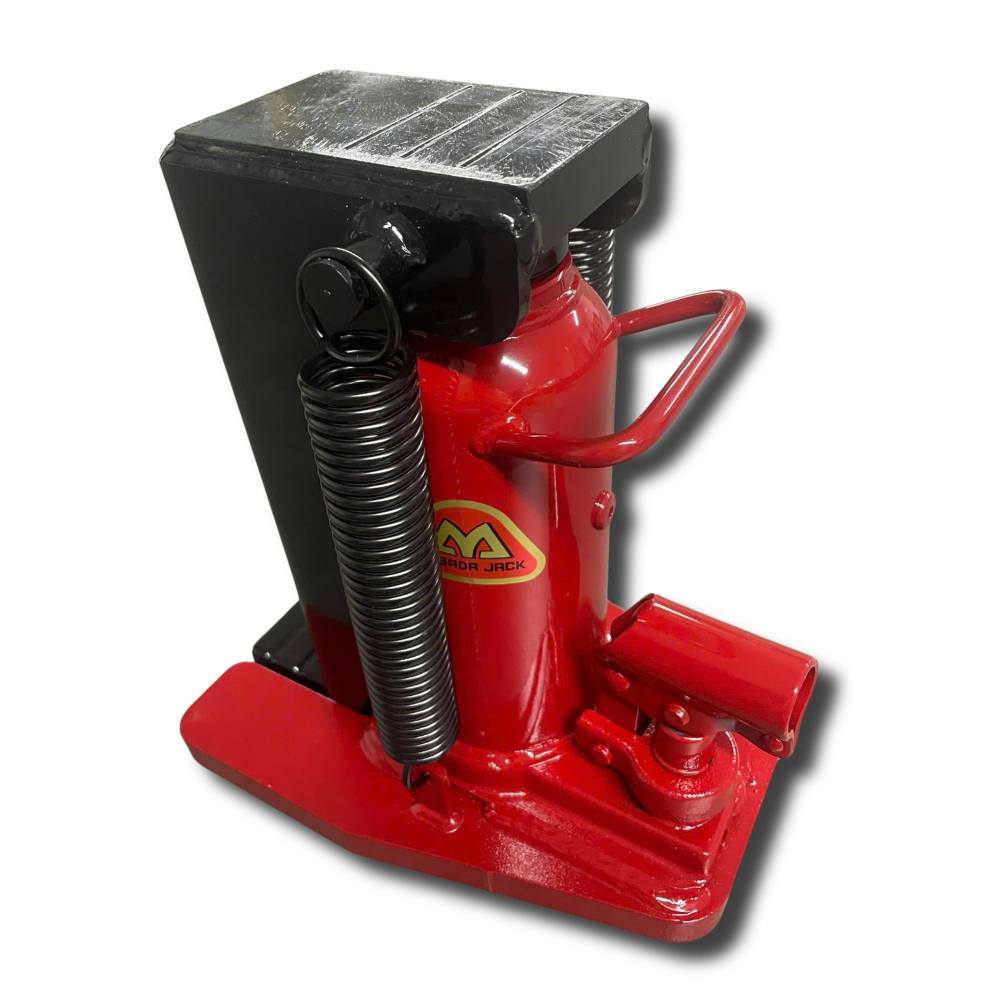
A hydraulic toe jack is a purpose-built piece of industrial equipment designed specifically to safely elevate massive loads within heavily restricted spaces. To guarantee operational stability, fail-safe load bearing, and high-tonnage capacity, the jack integrates several critical mechanical sub-assemblies. Each component is engineered to function independently while contributing to the overall structural integrity of the lift.
The main chassis of a hydraulic toe jack is forged from high-tensile alloy steel, engineered to withstand extreme internal hydrostatic pressure and external compressive forces. The sliding carriage is heavily reinforced to prevent structural deformation when asymmetrical loads are applied. The exterior of the housing is typically treated with industrial-grade anti-corrosive coatings to extend the equipment's lifecycle in harsh, high-humidity M&E (Mechanical & Electrical) environments.
The lifting toe is the most critical and defining component of the jack. This element is machined to sit extremely close to the substrate, facilitating direct insertion under low-clearance equipment. Usually featuring a ground clearance between 19mm and 65mm, the toe is either cast as a single solid piece with the carriage or attached via high-strength, heavy-duty welding. This metallurgical composition prevents brittle fracture or bending under maximum safe working loads (SWL).
The hydraulic cylinder acts as the primary pressure chamber where the lifting force is generated. It houses the hydraulic fluid and the main piston. As hydrostatic pressure increases, the piston is driven vertically to elevate the load. The internal walls of the cylinder are honed to micro-tolerances to minimize friction, prevent high-pressure fluid blowouts, and ensure consistent mechanical output during extended static lifts.
The main piston directly transfers the hydrostatic force from the cylinder to the sliding toe carriage. Manufactured from hardened, chrome-plated steel, the piston is highly resistant to wear and heavy structural loading. The polished surface reduces seal friction, ensuring that the vertical stroke is smooth, precise, and completely controlled.
Industrial toe jacks are typically equipped with an integrated manual pump manifold. When the operator actuates the pump lever, hydraulic fluid is displaced from the reservoir and compressed into the main cylinder, thereby generating the hydrostatic pressure required to elevate the piston. This self-contained pumping mechanism is engineered for rapid fluid displacement, requiring minimal physical exertion from the operator.
The internal check valve is a critical safety component designed to hold the pressurized fluid within the cylinder, effectively locking the load at the desired elevation without pressure bleed-off. Conversely, the release valve is utilized during the descent phase. By slowly opening this micro-threaded valve, fluid is safely bypassed back to the reservoir, allowing the multi-ton load to be lowered precisely and under complete control.
While small in size, the internal sealing system is vital to the jack's functionality. Premium polyurethane O-rings and backup rings seal the hydraulic circuit, preventing high-pressure fluid leakage and maintaining consistent hydrostatic pressure within the cylinder. These industrial-grade seals are formulated to resist chemical degradation from hydraulic oils and withstand extreme internal operating temperatures.
The base plate of the toe jack is structurally widened and thickened to ensure optimal ground pressure distribution. This expanded surface area stabilizes the equipment, preventing the base from cracking concrete substrates or sinking into softer industrial flooring. Certain models feature grooved or anti-slip base designs to lock the jack firmly in place, mitigating the catastrophic risk of load tilting.
The operational mechanics of a hydraulic toe jack are governed by Pascal's Law, which dictates that pressure applied to a confined fluid is transmitted equally in all directions. This principle allows the tool to generate immense mechanical lifting force using only a minimal physical input from the operator. Consequently, the toe jack can elevate 10-ton to 50-ton CNC machines in zero-clearance environments where standard lifting equipment is rendered useless.
When the operator actuates the manual pump lever, the internal micro-pump draws hydraulic fluid from the reservoir and forces it into the main cylinder chamber. Because hydraulic fluid is essentially incompressible, the internal hydrostatic pressure spikes rapidly. This immense pressure acts directly upon the surface area of the main piston, forcing it to travel vertically.
As the piston extends upward, the mechanical force is transferred to the attached lifting toe—the component directly engaged with the load. Because the toe requires mere millimeters of ground clearance, the jack slides easily beneath low-profile equipment. With continued pumping, the toe steadily and safely elevates the massive load.
During the lifting cycle, the internal check valve plays a mandatory safety role. It permits fluid to flow strictly in one direction—from the pump into the cylinder—and immediately locks to prevent backflow. This mechanism ensures that the internal hydrostatic pressure remains completely stable, holding the heavy load securely at the required height even when the operator stops pumping.
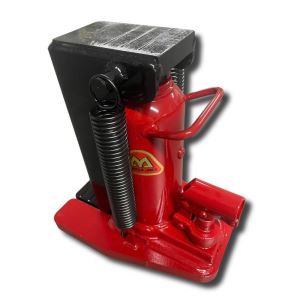
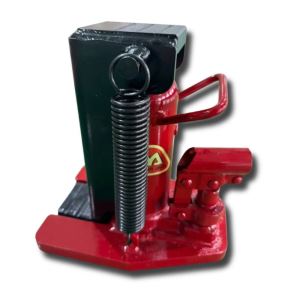
To initiate a controlled descent, the operator simply opens the manual release valve. The hydraulic fluid trapped in the cylinder is then safely bypassed back into the reservoir. Driven by the weight of the load and the dual heavy-duty return springs, the piston retracts, smoothly lowering the toe and the load back to the ground. The rate of descent is meticulously controlled by micro-adjusting the release valve, eliminating dynamic shock loads.
A definitive engineering advantage of the hydraulic toe jack is its dual-capacity lifting configuration. In addition to lifting via the top head (saddle) like a conventional bottle jack, it simultaneously offers lifting capabilities via the low-profile toe. This dual-point architecture provides riggers with extreme versatility during complex structural alignments, machinery relocation, and precision leveling tasks.
Hydraulic toe jacks are specialized lifting devices heavily deployed in mechanical engineering, fabrication workshops, and restricted construction environments. Driven by fluid dynamics and a highly specialized structural design, these jacks offer significant operational advantages over standard mechanical jacks, easily meeting the rigorous demands of heavy industrial lifting.
The most prominent advantage is the tool's ability to engage loads from ultra-low ground clearances. The forged steel toe allows operators to slide the lifting point directly beneath machinery chassis or concrete slabs without requiring a large insertion gap. This is mission-critical in confined M&E spaces where standard bottle jacks simply cannot fit.
Hydraulic toe jacks are engineered to manage extreme weights, with SWL (Safe Working Loads) ranging from 2 tons up to 50 tons, accommodating diverse industrial and civil engineering requirements. The hydraulic advantage allows operators to generate massive lifting power without physical strain. This drastically improves site efficiency, reducing the downtime associated with equipment repair and relocation.
Manufactured entirely from high-tensile alloy steel, these jacks offer exceptional resistance to compressive stress. The precision-machined housing, toe carriage, and piston ensure consistent mechanical output over years of deployment. Industrial anti-corrosive coatings further protect the equipment from oxidation when utilized in severe, high-humidity construction environments.
Safety is engineered directly into the hydraulic circuit. The integrated check valves prevent sudden pressure loss (load dropping), while the micro-threaded release valves ensure a millimeter-by-millimeter controlled descent. These fail-safes guarantee operator safety and protect multi-million-dollar equipment from impact damage during the rigging process.
The dual-point lifting architecture significantly enhances operational flexibility. Operators can utilize the high-capacity top head for standard vertical lifts or rely on the low-profile toe for restricted spaces. This versatility makes the hydraulic toe jack a universal tool across multiple heavy industry sectors.
Despite their immense power, these jacks feature a relatively straightforward mechanical design, allowing for simple operation even by general site workers. Maintenance protocols are minimal, generally requiring only routine hydraulic fluid checks, seal inspections, and external lubrication. This low-maintenance profile significantly reduces the total cost of ownership over the equipment's lifecycle.
Hydraulic toe jacks are specialized lifting instruments designed specifically to elevate extreme loads from ultra-low starting positions in congested environments. Leveraging hydrostatic mechanics, these jacks generate massive lifting force safely and consistently. Consequently, they are deployed extensively across multiple heavy engineering disciplines, from heavy industry to specialized civil projects.
Within fabrication facilities, toe jacks are standard equipment for rigging, moving, and leveling heavy machinery, CNC lathes, and automated production lines. Because the lifting toe sits virtually flush with the floor, it easily slides beneath machine leveling pads to elevate the equipment for initial commissioning, precise alignment, or scheduled mechanical maintenance. This minimizes manual labor and ensures the structural safety of the rigging team.
In the mechanical sector, toe jacks play a critical role in lifting heavy steel molds, large metal fabrications, marine engines, and bulky machine components. They provide technicians with the ability to precisely adjust the positioning of heavy components during welding, assembly, and machining. The stable and controlled hydraulic lift directly contributes to higher engineering tolerances and prevents component damage.
In heavy construction, hydraulic toe jacks are deployed to lift and align steel I-beams, structural columns, pre-engineered building frames, and precast concrete modules. The jacks assist in adjusting elevations, leveling structural joints, and temporarily securing loads during the bolting phases. In congested subterranean construction zones, the low-clearance capability of the toe jack is unmatched.
During the M&E maintenance of large-scale industrial machinery, toe jacks safely elevate heavy components to allow engineers access for inspection, bearing replacement, or internal cleaning. The equipment permits the precise, isolated lifting of specific machine sections, facilitating safer and more efficient maintenance workflows while mitigating the severe risks of manual lifting accidents.
Toe jacks are indispensable tools for the logistics teams responsible for relocating heavy industrial assets. During the moving process, the jack elevates the machinery just enough to allow the insertion of heavy-duty machine skates, roller skids, or transport pallets beneath the load. This standard operating procedure ensures the relocation is executed safely, smoothly, and without damaging the equipment chassis.
In high-capacity warehouses and port logistics centers, toe jacks are utilized to elevate, block, and reposition heavy static cargo, long-term storage machinery, or massive industrial pallets. The equipment streamlines the organization of heavy assets, optimizes floor space, and significantly accelerates the loading and unloading workflows.
Beyond the factory floor, toe jacks are deployed for unique heavy-lifting tasks, such as elevating massive power transformers, industrial generators, main switchboards (MSB), and even large commercial safes. The simple operation and immense hydraulic force save physical effort, reduce injury risks, and ensure complete safety during complex load manipulations.
In specialized scenarios such as urban search and rescue (USAR), emergency M&E repairs, or structural shoring, hydraulic toe jacks are utilized to lift collapsed heavy structures or free trapped equipment. The precision control and immense power of the jack allow rescue and maintenance teams to stabilize hazardous situations rapidly and effectively.
When procuring a hydraulic toe jack—a piece of mission-critical equipment required to safely elevate massive industrial loads from restricted ground clearances—selecting a highly reputable B2B distributor is paramount. The metallurgical quality and hydraulic integrity of the toe jack directly dictate site efficiency, absolute operator safety, and the long-term operational costs of your projects.
Among the various industrial suppliers in the region, Asia Pro Equip (A.P.E) has established itself as the definitive procurement channel for professional-grade hydraulic toe jacks. Trusted by procurement officers, mechanical engineers, and civil contractors across Singapore and Malaysia, A.P.E provides uncompromising quality and dedicated B2B support.
At Asia Pro Equip, every hydraulic toe jack model we supply complies with strict industrial engineering standards. We source exclusively from proven global manufacturers, and every unit undergoes rigorous factory load testing prior to dispatch. The core engineering hallmarks of our inventory include:
High-tensile forged steel housings designed to resist structural deformation under extreme SWL.
Precision-honed hydraulic cylinders and pistons that maximize lifting efficiency and fluid stability.
Ultra-low profile forged toes engineered for rapid insertion into confined M&E spaces.
Factory-calibrated safety bypass and release valves ensuring safe, controlled load manipulation.
You are guaranteed that the equipment procured through A.P.E will perform flawlessly, even when subjected to maximum tonnage in harsh construction environments.
Procuring a hydraulic toe jack requires specific load calculations and spatial awareness. The technical engineering team at Asia Pro Equip will not simply sell you a tool; we provide solutions:
We analyze your exact field requirements, including load center of gravity and spatial restrictions.
We recommend the precise tonnage capacity (e.g., 5-ton, 10-ton, or 25-ton) required for your specific application (fabrication, M&E, or heavy logistics).
We ensure the selected equipment aligns perfectly with your site's Health, Safety, and Environment (HSE) protocols.
This upfront technical consultation eliminates the risk of procuring under-rated or incompatible equipment, saving your company significant time and capital.
A defining factor for choosing A.P.E is our transparent B2B warranty protocols and dedicated post-purchase support. When you partner with us, you secure:
Comprehensive manufacturer warranties against all metallurgical and assembly defects.
Direct access to our technical support team for operational and maintenance guidance.
Rapid processing for any required hydraulic seal replacements or spare parts.
This robust after-sales infrastructure guarantees long-term peace of mind, protecting your capital investment in heavy industrial equipment.
The price of a hydraulic toe jack is dictated by its tonnage capacity and metallurgical quality. A.P.E offers highly competitive, tax-exclusive pricing that reflects the true industrial value of the equipment. Furthermore, we eliminate international supply chain delays. A.P.E maintains physical, ready-to-deploy stock at our local distribution centers in Singapore and Malaysia, ensuring rapid, direct-to-site dispatch via our trusted local logistics network.
We invite procurement officers to submit a Request for Quotation (RFQ) via the A.P.E portal. Detail your exact tonnage requirements, and our technical sales team will immediately provide a comprehensive commercial proposal. Partner with Asia Pro Equip to secure the reliable mechanical lifting power your projects demand.
Find answers to common inquiries about our power tools and professional services
Address:
Phone: +65 8914 6529
Email: [email protected]

All prices are listed in USD and exclude local taxes (such as GST/SST).
Final billing may be converted to SGD or MYR based on prevailing exchange rates at the time of formal quotation.
asiaproequip.com - 2026