


-
Address:
-
Phone: +65 8914 6529
-
Email: [email protected]

 English
Your cart
0 items
Shopping cart is empty (0 item)
English

In medium and high-voltage electrical distribution networks, the routing and termination of large-diameter underground cables present significant mechanical challenges. Industrial power cables frequently incorporate protective steel wire armor (SWA) or steel tape armor (STA) to prevent subterranean mechanical damage. Utilizing manual ratchet cutters on these armored cables induces severe operator fatigue, accelerates tooling wear, and often results in deformed conductor cores. Conversely, deploying high-speed abrasive saws generates hazardous thermal friction, airborne metal particulates, and sparks, which are strictly prohibited in explosive (Ex-rated) environments or confined subterranean cable vaults.
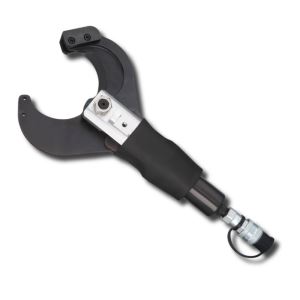
The Zupper hydraulic cable cutter CPC-65C hydraulic cable cutter provides a strictly mechanical, cold-cutting solution to these fabrication challenges. Engineered as a split-type, hydraulic actuation head, it utilizes 700-bar fluid pressure to drive a hardened steel blade through heavy-duty armored cables. The equipment is mechanically certified to cleanly sever copper (Cu) and aluminum (Al) conductors, including their integrated steel armor, up to a maximum overall diameter of 65.0 mm. By deploying the CPC-65C, mechanical electrical plumbing (MEP) contractors and utility engineers ensure safe, spark-free cable separation while preserving the internal geometry of the conductors for subsequent hydraulic crimping procedures.

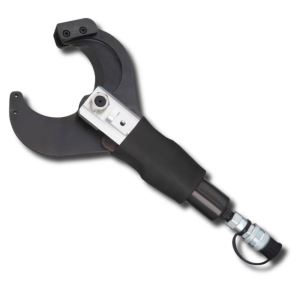
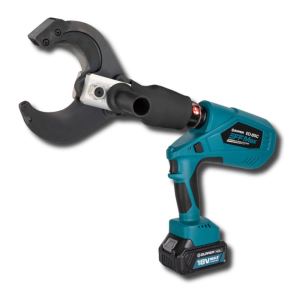
Zupper hydraulic cable cutter for 65mm amored cable cpc-65c
The physical environment of heavy cable routing is rarely unobstructed. Technicians must frequently execute cuts on cables situated deep within subterranean concrete trenches, densely packed vertical cable risers, or elevated overhead cable trays. In these restricted topologies, feeding a long, rigid, and heavy-gauge cable through a closed-guillotine style cutter is physically impossible without exceeding the manufacturer's minimum bending radius specifications.
The hand-operated hydraulic cable cutter CPC-65C is designed specifically to resolve this logistical bottleneck via its open C-frame architecture.
Side-entry capability: The open jaw design allows the operator to introduce the cutting head to the cable from a lateral angle (side-entry) at any specific point along the cable's longitudinal axis. The technician does not need access to a free end of the cable to thread it through the tool. This spatial flexibility is absolutely critical when tapping into existing continuous cable runs or removing damaged sections within a crowded switchgear enclosure.
Cable retention guide: Once the 65mm cable is positioned within the C-frame, the geometry of the heavy-duty anvil securely cradles the cylindrical profile of the cable. As hydraulic pressure is applied and the blade advances downward, the C-frame design prevents the cable from slipping laterally, ensuring the shear force is concentrated entirely on the vertical cutting plane.
Severing armored cables is a highly destructive mechanical process. The tooling must overcome the high tensile strength of the outer steel armor before penetrating the softer, highly conductive copper or aluminum core. The CPC-65C manages these fluctuating material densities through optimized cutting dynamics.
Sequential material penetration: Driven by external hydraulic pressure, the high-carbon steel blade initiates contact with the outer jacket and the steel armor. The immense linear force cleanly fractures the steel wires or tapes without relying on thermal friction. As the blade continues its descent, it slices through the internal insulation and the stranded conductor core.
Prevention of strand splaying: A critical failure point of inferior cutting tools is the tendency to crush or flatten the cable into an oval shape before cutting it, causing the individual copper strands to splay outward. The specialized concave geometry of the CPC-65C's sliding blade and lower anvil forces the conductor strands inward during the compression cycle. This cold-cutting dynamic ensures the severed cable retains its circular cross-section. Preserving this round profile is a mandatory prerequisite; a deformed, splayed cable cannot be inserted into strict-tolerance copper lugs for subsequent termination without cutting away outer strands, which severely degrades the electrical carrying capacity of the joint.
Executing cuts on elevated cable trays requires technicians to manipulate equipment while suspended on ladders or scaffolding. Integrating a heavy hydraulic pump directly into a 65mm cable cutter would create an equipment profile too heavy and unbalanced for safe overhead deployment.
The CPC-65C utilizes a split-type configuration, separating the mechanical cutting head from the hydraulic power source.
Net weight management: By removing the fluid reservoir and pumping mechanism from the tool body, the CPC-65C achieves an optimized net weight of approximately 6.0 kg. This manageable unit weight permits a single technician to safely hoist the cutting head, position it precisely over the cable, and maintain stability.
Two-man operational safety: The split-type architecture facilitates a highly secure two-man operational protocol in hazardous environments. One technician positions and secures the 6.0 kg cutting head within the confined space or elevated tray, while a second technician remains safely on the ground to actuate the external hydraulic pump and monitor the overall pressure system.
The continuous cutting of steel-armored cables inevitably induces wear on the cutting edge. To minimize lifecycle maintenance costs, the CPC-65C is engineered with a modular, maintainable blade architecture.
High-carbon alloy blade: The primary sliding blade is forged from a specialized high-carbon alloy steel, subjected to rigorous heat treatment processes. This metallurgical composition provides the necessary hardness to fracture steel wire armor without suffering immediate edge chipping, while retaining enough structural toughness to prevent catastrophic blade snapping under 700-bar loads.
Independent component replacement: Unlike fixed-jaw cutters that require complete unit replacement when the blade dulls, the CPC-65C features an independently replaceable sliding blade. Facility maintenance teams can extract the retaining pins, remove the worn blade, and install a factory-calibrated replacement blade within minutes. Procuring and stocking spare blades significantly reduces equipment downtime and lowers the total cost of ownership for major infrastructure contractors.
To maximize the operational lifespan of the high-carbon blade and ensure operator safety, technicians must adhere to the following procedural workflow:
Equipment inspection: Prior to operation, visually inspect the C-frame for structural micro-fissures. Verify that the sliding blade edge is free of severe chips and that the quick-connect hydraulic coupler is clean and free of debris.
System integration: Connect the high-pressure hose from the 700-bar hydraulic pump to the quick-connect coupler on the CPC-65C. Ensure the locking collar is fully engaged to prevent pressurized fluid ejection.
Cable positioning: Utilize the side-entry C-frame to slide the tool over the target cable. Ensure the cable rests completely flat against the bottom curvature of the anvil. Do not attempt to cut cables at an oblique angle.
Hydraulic advancement: Actuate the external pump to advance the sliding blade. Monitor the initial contact between the blade and the cable armor. Ensure the cable remains stable and does not twist out of alignment.
Continuous cutting: Continue applying hydraulic pressure. The blade will fracture the armor and sever the core. A distinct drop in hydraulic resistance indicates the cut is complete. Do not over-pressurize the system once the blade has reached the bottom of its stroke.
Retraction: Open the release valve on the external pump. The internal heavy-duty spring within the CPC-65C will retract the blade upward, allowing the operator to disengage the tool from the severed cable.
Incomplete cable penetration: If the blade halts mid-cut and fails to sever the remaining copper strands, the external pump has likely failed to reach the required 700-bar pressure threshold. Check the pump's oil reservoir level and inspect all hose couplings for fluid seepage.
Blade jamming within the cable: If the hydraulic pressure is released but the internal spring fails to retract the blade out of the thick cable insulation, do not attempt to pry the tool apart with crowbars. This indicates mechanical binding due to an oblique cutting angle. Gently re-pressurize the system slightly to stabilize the blade, manually align the cable to a perpendicular position, and release the pressure again.
Procurement officers and site engineers must verify compatibility with the following parameters prior to site deployment:
| Technical Parameter | Metric Value |
| Model | Zupper CPC-65C |
| Tool classification | Split-type hydraulic cable cutter |
| Maximum cutting capacity (Diameter) | 65 mm |
| Compatible materials | Copper, Aluminum, Armored cables (SWA/STA) |
| Frame architecture | Open C-frame (Side-entry) |
| Rated fluid pressure requirement | 700 bar (10,000 psi) |
| Rated output | 60 kN (6 Tons) |
| Oil Capacity | 50 ml |
The CPC-65C requires an external 700-bar (10,000 psi) hydraulic power source to drive the internal cutting ram. Based on the specific logistics of your cable routing project, we suggest the following two actuation configurations:
For localized field deployment: Zupper CP-700 Manual Hydraulic Pump
For technicians operating in subterranean vaults, remote substations, or active construction sites without a reliable electrical grid, the CPC-65C must be operated via the CP-700 manual pump. This dual-stage manual unit efficiently builds the required pressure to shear armored cables while maintaining a portable footprint. It ensures complete operational independence in rugged field conditions.

For continuous workshop or staging area production: Zupper TEP-700B Electric Pump
If the cable cutting operations are being conducted in a centralized staging area or a pre-fabrication workshop, we mandate pairing the cutter with the TEP-700B electric pump. This configuration provides rapid fluid displacement for high-volume cutting cycles. The integrated foot-pedal allows the secondary operator to control the cutting speed precisely while keeping a safe distance from the high-tension armored cable during the shear.

Asia Pro Equip supplies verified, heavy-duty electrical tooling to the MEP engineering, marine, and civil construction sectors. We maintain strategic, ready-to-deploy inventory of the Zupper CPC-65C and its associated replacement blades within our regional logistics hubs, ensuring efficient supply chain fulfillment to industrial zones across Singapore and Malaysia.
Operating on a strictly transparent B2B pricing model, our technical sales division is prepared to process your official RFQ, verify equipment compliances against your local engineering specifications, and fulfill your operational requirements.
Corporate Sales & RFQ: [email protected]
| Technical Parameter | Metric Value |
| Model | Zupper CPC-65C |
| Tool classification | Split-type hydraulic cable cutter |
| Maximum cutting capacity (Diameter) | 65 mm |
| Compatible materials | Copper, Aluminum, Armored cables (SWA/STA) |
| Frame architecture | Open C-frame (Side-entry) |
| Rated fluid pressure requirement | 700 bar (10,000 psi) |
| Rated output | 60 kN (6 Tons) |
| Oil Capacity | 50 ml |
Find answers to common inquiries about our power tools and professional services
Address:
Phone: +65 8914 6529
Email: [email protected]

All prices are listed in USD and exclude local taxes (such as GST/SST).
Final billing may be converted to SGD or MYR based on prevailing exchange rates at the time of formal quotation.
asiaproequip.com - 2026