 English


Your cart
0 items
Shopping cart is empty (0 item)
English
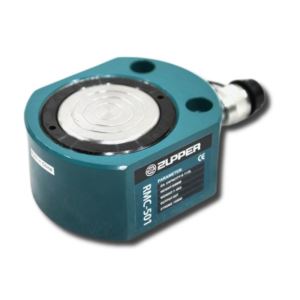
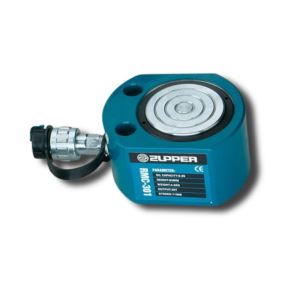
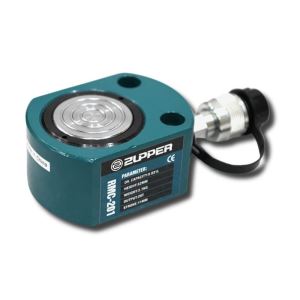
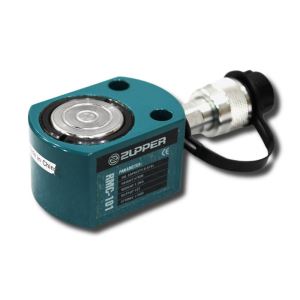
When the gap between the load and the floor is only 80 mm, a standard bottle jack will not slide underneath. The lifting point sits inside a recessed bracket, the work bay is blocked by piping, or the machine frame leaves too little clearance for a tall cylinder. A conventional jack simply cannot reach the load, and a manual pry bar is not a controlled lifting method. A low profile hydraulic jack is built for exactly this situation: a flat, compact hydraulic cylinder that slides into a narrow gap and delivers rated lifting force with a smooth, repeatable stroke.
Asia Pro Equip (A.P.E) supplies a range of low profile hydraulic jacks from the Zupper brand, covering capacities from light-duty positioning to heavy industrial lifting. Every unit is spec-verified for pressure rating, stroke length, minimum height and load capacity, and is ready to ship to your site in Malaysia or Singapore.

A single-acting jack uses hydraulic pressure to lift the load and relies on gravity or a spring to return the piston to the retracted position. These are the most common and cost-effective option for routine maintenance and positioning work.
The Zupper single-acting low profile range covers capacities from 10T to 100T. The 10T and 10T models suit light machine positioning, conveyor adjustment and small equipment alignment. The 25 t and 50 t models handle medium industrial loads such as pump housings, motor assemblies and structural steel sections. The 100 t model is intended for heavy fabrication, shipyard work and large structural lifting where the clearance is too tight for a conventional jack.
Each model is rated for 700 bar operating pressure and connects to a standard hydraulic hose and fitting. The minimum height (retracted) is the key dimension to check against your available clearance. Always measure the gap before selecting a model, and allow at least 10 mm of extra clearance for the hose and fitting.
A double-acting jack uses hydraulic pressure for both the lifting and the lowering stroke. This gives the operator full control over the descent speed, which is important when lowering a heavy load onto a precise mounting surface or holding it at an intermediate height for an extended period.
Double-acting low profile jacks are available in the 10 t to 100 t range. They require a dual-hose hydraulic connection (one hose for the lift side, one for the return side), so confirm the pump and hose configuration before ordering. The added control makes double-acting jacks the preferred choice for precision alignment, press work and any application where an uncontrolled drop is unacceptable.
For applications where a separate hydraulic pump and hose are impractical, an electric low profile jack integrates a built-in electric motor and pump into the jack body. The operator controls lift and lower with a handheld switch or foot pedal, removing the need for a second person to run a pump.
Electric low profile jacks are available in the 5 t to 50 t range. They are particularly useful in production lines, assembly bays and maintenance areas where a hydraulic pump would create a tripping hazard or where the operator needs to make frequent, small adjustments. Before ordering, confirm the electrical supply (voltage, phase, plug type) at your site in Malaysia or Singapore, as configurations may differ between 220 V single-phase and 380 V three-phase systems.
| Model | Brand | Capacity | Type | Min Height (mm) | Stroke (mm) | Price (USD) |
|---|---|---|---|---|---|---|
| Zupper RMC-101 | Zupper | 10 t | Single-acting | 47 | 11 | 89 |
| Zupper RMC-201 | Zupper | 20 t | Single-acting | 52 | 11 | 139 |
| Zupper RMC-301 | Zupper | 30 t | Single-acting | 63 | 12 | 189 |
| Zupper RMC-501 | Zupper | 50 t | Single-acting | 69 | 16 | 239 |
Prices are in USD and exclude shipping, taxes and special accessories. Minimum height and stroke values are nominal; confirm the exact dimensions against the product data sheet before ordering, particularly when working in a clearance-critical environment. All models are rated for 700 bar operating pressure unless stated otherwise.
A low profile hydraulic jack is one part of a broader hydraulic toolkit. For general-purpose lifting on the same site, pair it with our hydraulic jacks range, and complete your setup with hydraulic crimping tools for cable connections. For cable entry and gland work, our hydraulic hole punchers keep the entire process hydraulic and controlled. If you need a portable power source for your jack, our hydraulic pumps range covers manual, electric and battery options at 700 bar.
Tell us the load you need to lift, the available clearance at the lifting point, the required stroke, and whether you prefer a manual, double-acting or electric model. We will recommend the correct Zupper low profile hydraulic jack and send a firm price with delivery details.
Email us at [email protected] with your specifications and delivery location, or browse the full low profile hydraulic jack range to add units to your order today.
Find answers to common inquiries about our power tools and professional services
Sale Team Email : [email protected]

All prices are listed in USD and exclude local taxes (such as GST/SST).
Final billing may be converted to SGD or MYR based on prevailing exchange rates at the time of formal quotation.
asiaproequip.com - 2026