 English


Your cart
0 items
Shopping cart is empty (0 item)
English
The industrial and technological landscape of Singapore and Malaysia is currently experiencing an unprecedented surge in high-voltage electrical infrastructure development. Driven by the aggressive expansion of hyper-scale data centers in Jurong and Tuas, the continuous modernization of the national power grid, and the complex electrical retrofitting of maritime vessels, electrical engineering contractors are facing immense operational pressures.
Within these mega-projects, electrical teams are mandated to lay, route, and terminate hundreds of kilometers of heavy-gauge power cables. These are not standard domestic wires; these are massive, multi-stranded copper (Cu) and aluminum (Al) conduits, often reinforced with thick steel armor to withstand subterranean or deep-sea environments. When a contractor needs to terminate or splice these massive conduits, standard manual pliers are entirely obsolete. The industry relies heavily on specialized, extreme-duty cable cutter tools to execute flawless, clean, and safe severing operations.
A common, yet catastrophic mistake made by inexperienced contractors is attempting to sever heavy-gauge power cables using high-speed abrasive tools like angle grinders or reciprocating saws. In the modern regulatory environment of Singapore, this is a severe violation of Workplace Safety and Health (WSH) protocols.
The hazard of thermal degradation: High-speed abrasive cutting generates extreme friction and localized heat. This intense heat instantly melts and degrades the polymer insulation (XLPE or PVC) surrounding the internal copper strands. Compromised insulation leads directly to high-voltage arcing, short circuits, and catastrophic electrical fires once the cable is energized.
The danger of jagged strands: Abrasive saws tear through the metal, leaving heavily jagged, burred, and frayed copper strands. When an electrical engineer attempts to insert a frayed cable end into a hydraulic crimping lug, the uneven strands create micro-voids. These voids drastically increase electrical resistance at the joint, causing thermal runaway and joint failure.
The cold-cutting mandate: Professional industrial cable cutters operate strictly on the principle of Cold-Cutting (Shear Cutting). By utilizing specialized, overlapping bypass blades driven by immense mechanical or hydraulic force, these tools slice through the metal strands cleanly and instantly. This process generates absolute zero heat, zero sparks, and leaves a perfectly symmetrical, mirror-smooth cable end ready for immediate, high-conductivity crimping.
To maximize on-site efficiency, procurement officers must understand the distinct mechanical architectures of industrial cable cutters and deploy the correct tool for the specific environmental challenge.
For highly confined spatial envelopes where large hydraulic tools cannot fit, Ratchet Cable Cutters are the standard. These tools utilize a step-by-step internal ratcheting gear system. The electrician pumps the handles repeatedly, incrementally advancing the crescent-shaped blades through the cable. This mechanical advantage allows a single operator to manually shear through thick copper or aluminum cables with minimal physical exertion. They are highly valued for their compact profile and zero-maintenance requirements.

When dealing with extreme-diameter cables that exceed the mechanical limits of a ratchet gear, engineers transition to Hydraulic Cable Cutters. Operating on fluid dynamics, the technician pumps a handle to drive hydraulic oil against a piston, forcing a guillotine-style blade through the cable. Capable of generating up to 10 tons of localized shearing force, these tools are indispensable for heavy underground trench work and main distribution board (MDB) installations.
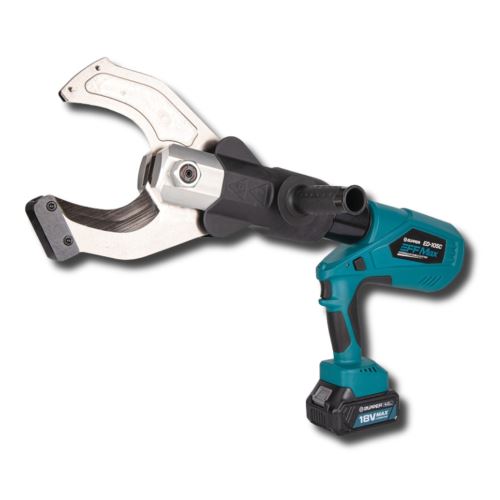
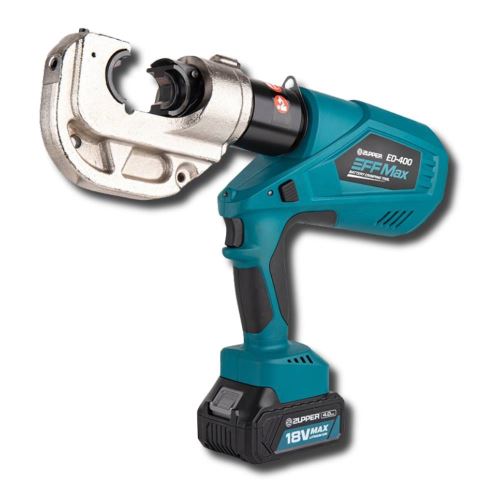
The absolute pinnacle of modern electrical tooling is the Battery-Powered Hydraulic Cable Cutter, heavily championed by premium industrial brands like Zupper. These sophisticated tools eliminate manual pumping entirely. Operating on advanced 18V lithium-ion platforms, a micro-electric motor drives a highly miniaturized internal hydraulic pump. With a single pull of the trigger, the tool delivers massive shearing force in seconds. Engineered often in a streamlined "stick-type" or inline architecture, these battery-operated cutters allow an electrician to navigate deep inside a congested, energized switchgear cabinet and sever a heavy-gauge cable using only one hand, maximizing both speed and operator safety.

The most frequent cause of catastrophic cable cutter failure is a fundamental misunderstanding of materials science. Procurement divisions must strictly differentiate between standard cables and reinforced cables.
Standard Cu/Al cables: These consist of pure copper or pure aluminum strands. Standard industrial cable cutters are forged with blades specifically hardened to shear these relatively soft, highly conductive metals.
SWA (Steel wire armour) & ACSR (Aluminum conductor steel reinforced): Subterranean cables are often wrapped in heavy steel wire (SWA) to prevent physical crushing. High-tension overhead power lines utilize an inner core of solid steel (ACSR) to support the weight of the aluminum conductors across long distances.
The shatter risk: Steel possesses a vastly different metallurgical hardness compared to copper or aluminum. If an operator attempts to cut an ACSR or Armored cable using a cutter designed purely for Cu/Al, the extreme hardness of the steel core will instantly chip, roll, or catastrophically shatter the cutting blades under hydraulic pressure. Shrapnel from a shattered blade under 10 tons of force is a critical hazard. Engineers must specifically procure ACSR/Armored Cable Cutters, which feature specially tempered, extreme-hardness alloy blades engineered explicitly to shear through solid steel cores without sustaining edge damage.
When tendering for a new fleet of electrical tools, corporate procurement managers should evaluate three non-negotiable parameters:
Maximum outer diameter capacity: Never purchase a tool that exactly matches your largest cable. If your facility routinely handles 50mm cables, procure a tool rated for 65mm or 85mm. Forcing a cable into a cutter jaw that barely fits causes severe blade binding and lateral stress on the hydraulic head.
Material verification matrix: Always verify the specific cable types utilized in your project blueprints. Maintain distinctly separate toolboxes for Cu/Al cutters and ACSR cutters on the job site to prevent cross-contamination and accidental blade destruction.
Ergonomics and spatial constraints: For open-air trench work, large guillotine-style hydraulic cutters are highly effective. However, for maintenance teams operating inside hyper-scale data centers or cramped electrical substations, investing in compact, inline battery-powered cutters (such as the Zupper series) is essential to ensure technicians can physically maneuver the tool into the required cutting position.
Executing a heavy-duty cable cut requires strict adherence to electrical safety and mechanical protocols to ensure absolute WSH compliance.
Absolute de-energization: Before a cutting tool ever touches a conduit, the electrical line must be completely de-energized, tested with a calibrated voltage meter, and physically locked out (Lockout/Tagout). Slicing into a live high-voltage cable will result in a lethal arc flash and the instant vaporization of the cutting tool.
Perpendicular blade alignment (The 90-degree rule): The operator must align the cutting blades at a perfect 90-degree perpendicular angle to the cable. Attempting to cut the cable at a skewed angle forces the blades to twist as they close. This induces severe lateral shear stress on the hinge pin, leading to permanent blade misalignment or the immediate snapping of the hydraulic cutting head.
Pre-cut integrity diagnostics: Prior to every shift, technicians must visually inspect the cutting blades for micro-fractures, chips, or dulling. A compromised blade will not shear cleanly; it will crush and deform the cable strands, ruining the conductivity profile of the subsequent termination.
For electrical contractors, project managers, and facility directors across Singapore and Malaysia, sourcing critical electrical tooling requires a partner who deeply understands the extreme demands of high-voltage engineering. Relying on consumer-grade tools for hyper-scale infrastructure projects guarantees critical failures and project delays.
Asia Pro Equip (A.P.E) stands as the region’s premier distributor of highly verified, extreme-duty electrical tooling. We specialize in providing comprehensive, strategically integrated cable preparation ecosystems.
We meticulously maintain a strategic, ready-to-deploy physical inventory of premium cable cutters - ranging from heavy-duty manual ratchet systems to advanced, battery-powered hydraulic cutters designed specifically for congested switchgears. Furthermore, we supply specialized, extreme-hardness cutters explicitly engineered for ACSR and heavy armored cables.
Operating on a transparent, highly competitive B2B pricing model, our technical engineering division is fully prepared to consult on your specific electrical termination requirements. We will meticulously verify equipment specifications, ensuring flawless supply chain fulfillment directly to your data center construction site, commercial shipyard, or power grid substation.
Ensure every heavy-gauge cable is severed with absolute precision and unyielding safety.
Corporate procurement & Technical inquiries: [email protected]
Find answers to common inquiries about our power tools and professional services
Address:
Phone: +65 8914 6529
Email: [email protected]

All prices are listed in USD and exclude local taxes (such as GST/SST).
Final billing may be converted to SGD or MYR based on prevailing exchange rates at the time of formal quotation.
asiaproequip.com - 2026