 English


Your cart
0 items
Shopping cart is empty (0 item)
English
Singapore and Malaysia stands as a paramount global hub for maritime shipping, highly advanced aerospace maintenance, and precision semiconductor manufacturing. Within this relentless, high-stakes industrial ecosystem, the fundamental act of lifting and moving extreme structural payloads is a daily operational necessity. However, in these heavily regulated environments, moving a 50-ton CNC machine, aligning massive maritime engine blocks, or executing bridge bearing replacements cannot be accomplished with brute force or standard consumer-grade tools. It requires a highly coordinated, mathematically precise ecosystem of industrial lifting equipment.
Procurement officers, structural engineers, and heavy machinery mechanics frequently utilize the term "lifting equipment" as a blanket statement. Yet, in practice, this category is sharply divided into two distinct logistical phases: Macro-positioning and Micro-precision leveling. Understanding the distinct physics, power generation methods, and strict operational limitations of each equipment class is absolutely critical for ensuring Workplace Safety and Health (WSH) compliance and maximizing project efficiency across all Singapore and Malaysiaan job sites.
To build a flawless lifting strategy, one must distinguish between moving a payload through the air and permanently supporting it from the ground up.
The first stage of any major heavy-lifting operation is macro-positioning. This involves aerial lifting equipment designed to transport massive tonnages across large spatial areas. Overhead gantry cranes in precast concrete yards, towering tower cranes on commercial construction sites, and heavy-duty wire rope hoists in assembly plants fall into this category. They are irreplaceable for lateral movement and broad vertical drops. However, cranes and suspended cables inherently lack absolute structural rigidity. A payload suspended by steel wire will always experience micro-sway, making absolute millimeter-perfect alignment physically impossible.
Once a crane lowers a massive structural module or industrial machine into its general location, the crane cables must eventually be slacked. The payload must now be precisely leveled, aligned, and structurally supported entirely from the bottom up. This is where heavy-duty hydraulic lifting equipment takes over. Unlike aerial hoists, hydraulic cylinders provide unyielding, rigid mechanical support. Driven by the incompressible nature of hydraulic fluid, these ground-based lifting jacks allow engineers to execute precision elevation with absolute stability, transforming thousands of pounds of fluid pressure into controlled vertical kinetic energy.
A critical misconception frequently encountered in modern equipment procurement is the expectation that all modern industrial tools should be battery-powered. While battery technology has revolutionized rotary tools like drills and crimpers, it has no place in the sustained, heavy-duty static lifting of structural payloads.
It is a fundamental rule of fluid dynamics and heavy industrial rigging that high-capacity hydraulic jacks do not use internal battery power. Relying on a fragile lithium-ion circuit board to sustain a 50-ton suspended concrete girder is an extreme safety violation. Internal batteries add unnecessary bulk to the lifting cylinder, introduce dangerous thermal failure points, and cannot sustain the continuous, high-volume fluid displacement required for heavy structural elevation.
Instead, true industrial lifting equipment operates exclusively via robust, external fluid delivery systems. The hydraulic cylinders are purely mechanical actuators, driven by high-pressure hydraulic oil (typically rated at 10,000 PSI / 700 Bar). This pressurized fluid is generated by independent manual hydraulic hand pumps (such as the Zupper CP-700) or heavy-duty electric-driven hydraulic pumps. By separating the power generation (the pump) from the lifting actuator (the cylinder), engineers can remotely operate the lift from a safe distance, maintaining absolute micro-metric control over the fluid flow without exposing themselves to the immediate drop zone.
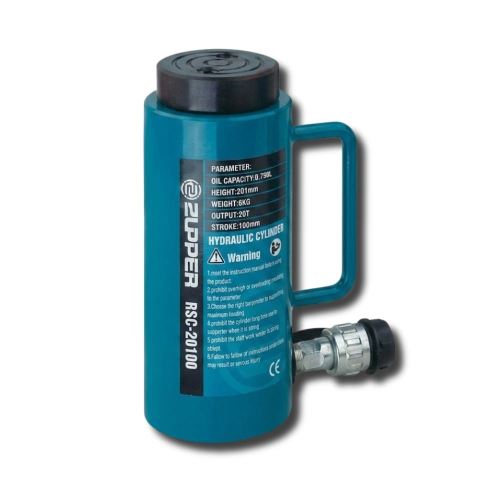
For standard structural lifting where spatial clearance is not a severe restriction, single-acting standard hydraulic cylinders are the primary weapons of choice. The Zupper RSC Series represents the industry standard for these high-capacity, extended-stroke applications.
When lifting massive precast beams or aligning heavy steel framework, rigging crews require significant vertical elevation in a single, continuous fluid motion. The Zupper RSC series is meticulously engineered to provide this exact capability, offering extended linear strokes ranging from 50mm to 150mm. For instance, a 20-ton cylinder like the Zupper RSC-20100 provides exactly 100mm of uninterrupted vertical lift. This extended stroke is critical; it allows the operator to lift the payload to the required working height without the highly dangerous need to constantly pause, insert temporary steel blocking (cribbing), and reset the jack multiple times.
Machined from high-yield, heavy-duty forged steel, these standard cylinders feature grooved, hardened steel saddles. This critical design element provides a high-friction contact patch that actively bites into the steel or concrete payload, preventing the load from slipping laterally during elevation. Whether deployed in a Malaysian shipyard or a Singapore and Malaysiaan infrastructure project, the RSC series delivers the brute force and sustained height required for primary structural elevation.
While standard cylinders excel in open environments, industrial maintenance frequently occurs in highly restricted spaces. When executing bridge bearing replacements, leveling precision CNC machinery, or separating heavy commercial pipe flanges, the available vertical clearance is often less than 60mm. Standard jacks simply cannot fit. This necessitates the deployment of specialized low-profile hydraulic cylinders, such as the Zupper RMC Series.
Low-profile lifting equipment is characterized by its ultra-flat, disk-like architecture. However, operating within this highly compressed geometry introduces severe physical constraints. It is an absolute, non-negotiable rule of hydraulic engineering that the maximum safe operating stroke for a heavy-duty low-profile cylinder is strictly limited to 20mm.
If a manufacturer attempts to engineer a low-profile cylinder with a stroke exceeding 20mm, the internal guide rings and seals lose their structural overlap. When lifting 30 or 50 tons, any lateral shift in the load would cause the over-extended piston to violently blow out the side of the cylinder wall, resulting in a catastrophic load drop. The Zupper RMC series strictly adheres to this 20mm limitation, guaranteeing that technicians working in Singapore and Malaysia's most confined, high-risk industrial pockets can elevate massive loads with absolute structural safety and zero risk of equipment rupture. Click below picture to learn more detail:

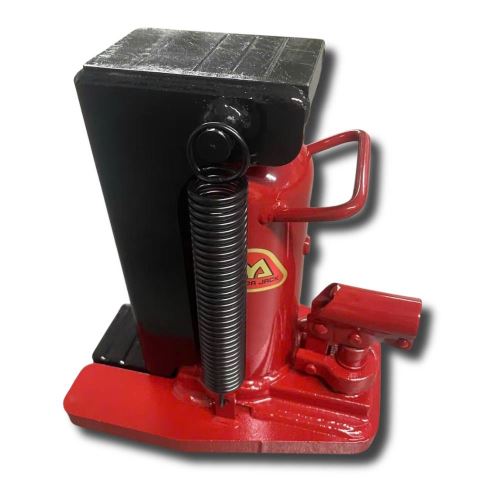
While low-profile cylinders are excellent for lifting payloads from directly underneath, there are frequent scenarios in heavy machinery moving where there is literally zero clearance beneath the load. Imagine a 15-ton industrial stamping press sitting completely flush on a concrete factory floor. You cannot slide a low-profile jack beneath it. To overcome this specific logistical nightmare, the industry relies on a completely different class of lifting equipment: The Hydraulic Toe Jack.
In this highly specialized arena, Japanese engineering stands supreme, specifically through the deployment of the Masada MHC-15T and its broader toe jack lineage.
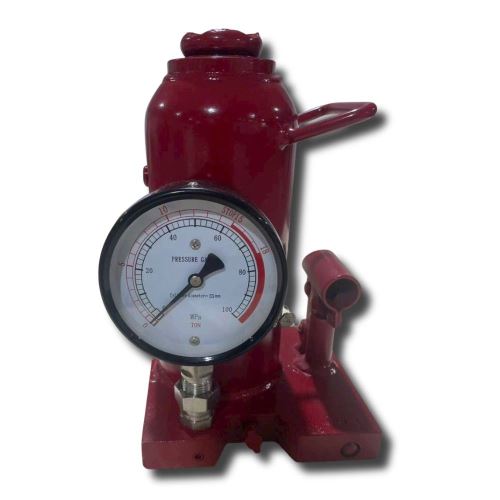
A Masada toe jack is uniquely designed with a heavy-duty lifting "toe" located at the absolute base of the cylinder, resting just millimeters off the ground, alongside a standard lifting "head" at the top. This allows the rigging crew to slide the thin steel toe into the microscopic gap between the heavy machinery and the floor. As the operator pumps the handle, the entire hydraulic housing climbs the internal piston, simultaneously lifting the heavy payload from the extreme low point.
The Masada MHC-15T (capable of lifting 30 tons on the top head and 15 tons on the bottom toe) is renowned across Southeast Asia for its unyielding internal valve mechanics and flawless weld integrity. Unlike separate cylinder-and-pump systems, Masada bottle and toe jacks integrate the manual pumping mechanism directly into the heavy steel housing. This creates a self-contained, highly mobile lifting platform that is utterly indispensable for specialized machinery movers, factory relocations, and emergency heavy-rescue operations. click below picture to learn more:

Possessing world-class lifting equipment from Zupper and Masada is only half the equation; executing the lift with strict adherence to physical safety protocols is what prevents industrial fatalities. All professional rigging crews must mandate the following SOPs:
Absolute Load Centering: Hydraulic cylinders are designed to handle immense vertical compressive forces, but they are highly vulnerable to lateral (side) loading. The payload must be perfectly centered over the principal axis of the jack. Off-center loading will instantly score the internal cylinder walls, destroy the hydraulic seals, and cause immediate pressure loss.
Foundation Verification: Never deploy a hydraulic jack directly onto soft soil, asphalt, or compromised concrete. The extreme point-load generated by the base of the cylinder will punch directly through weak surfaces. Always utilize heavy-duty steel distribution plates (cribbing plates) to spread the kinetic force over a wider structural area.
The "Lift and Block" Mandate: Hydraulic pressure is a temporary lifting force, not a permanent structural support. You must never allow a suspended load to rest entirely on the hydraulic pressure of a jack or cylinder for extended periods, and personnel must never position their bodies beneath a load supported only by hydraulics. As the equipment elevates the load, operators must continuously insert mechanical cribbing (hardwood blocks or steel pillars) beneath the payload. If a hydraulic seal were to fail, the load immediately settles onto the mechanical cribbing, preventing a catastrophe.
For corporate procurement divisions and project managers across Singapore and Malaysia and Malaysia, approaching lifting equipment as a series of isolated purchases is highly inefficient. True operational readiness requires a comprehensive, strategically integrated lifting ecosystem.
A fully equipped industrial fleet should seamlessly combine the unique strengths of various electromechanical architectures.
Invest in the Zupper RSC standard cylinders and Zupper CP-700 manual pumps for heavy, extended-stroke infrastructure elevation.
Supplement this with Zupper RC low-profile cylinders strictly calibrated for 20mm precision lifts in confined spatial envelopes.
Finally, integrate Masada toe jacks to guarantee that your machinery moving teams can manipulate heavy payloads even when ground clearance is virtually non-existent.
By understanding the distinct physical limitations, power generation realities, and optimal application environments of each class of lifting equipment, organizations can eliminate operational downtime, drastically enhance workplace safety, and ensure that every heavy load is managed with absolute precision.
Navigating the complex specifications of heavy industrial lifting equipment requires expert technical guidance. At Asia Pro Equip (A.P.E), we provide highly verified, extreme-duty lifting solutions to a massive, highly diverse regional clientele across Singapore and Malaysia, Malaysia.
We meticulously maintain a strategic, ready-to-deploy physical inventory of Zupper hydraulic cylinders, high-pressure pump systems, and premium Masada lifting jacks. Operating on a transparent, highly competitive pricing model explicitly tailored to support mass infrastructure fleets and independent contractors alike, our technical sales division is fully prepared to consult on your specific payload requirements. Whether you are outfitting a massive shipyard or upgrading a private heavy machinery workshop, our team will meticulously verify equipment specifications against your unique needs and flawlessly fulfill your operational requirements.
Corporate Procurement & Technical Inquiries: [email protected]
Find answers to common inquiries about our power tools and professional services
Address:
Phone: +65 8914 6529
Email: [email protected]

All prices are listed in USD and exclude local taxes (such as GST/SST).
Final billing may be converted to SGD or MYR based on prevailing exchange rates at the time of formal quotation.
asiaproequip.com - 2026